
From Cold Lead to Hot Signal: Turning Trials into Revenue Signals
Self-service trials give prospects direct access to your product.
They let people get hands-on without the friction of scheduling calls or coordinating an evaluation. For many buyers, that is exactly what they want.
In theory, that should make trials one of the most valuable sources of insight into how people evaluate what you’ve built.
In practice, most of that signal never makes it to the systems where it can be acted on.
People sign up, click around, and then disappear. You send a few emails. Maybe they respond, maybe they don’t. And most of the time, you have no idea what actually happened.
As Chuck D’Antonio, Director of Sales at Replicated, put it in a recent RepliCon talk, trials can start to feel like a black hole.
The Problem with Self-Service Trials
Giving someone access to your software is a good thing. But once they are in, most teams lose visibility.
A prospect might log in, explore, or start using the product in a meaningful way. Or they might not. From the outside, it all looks the same.
You rely on email engagement and form fills, while the most important signal, what they are actually doing inside your product, never reaches your CRM or the sales and RevOps teams responsible for acting on it.
That is what makes trials feel unpredictable. You are reacting to silence instead of responding to behavior.
Turning Product Activity Into Signals
The shift Chuck outlined is simple.
Instead of treating trials as anonymous activity, you treat them as a stream of signals.
With Replicated, key moments in the trial flow can be captured as events:
- A prospect signs up
- A user logs into the Enterprise Portal
- They create or upgrade an instance
- They download a release
Each step adds context.
A signup shows interest. A login shows engagement. Creating or upgrading an instance signals deeper evaluation. Bringing in additional users suggests internal adoption.
Taken together, these events provide a much clearer picture of intent than email engagement ever could.
Wiring Signals Into Your Revenue System
Capturing signals is only useful if they reach the people who need them.
In the talk, Chuck showed how these events can be wired directly into a CRM, using Salesforce as an example.
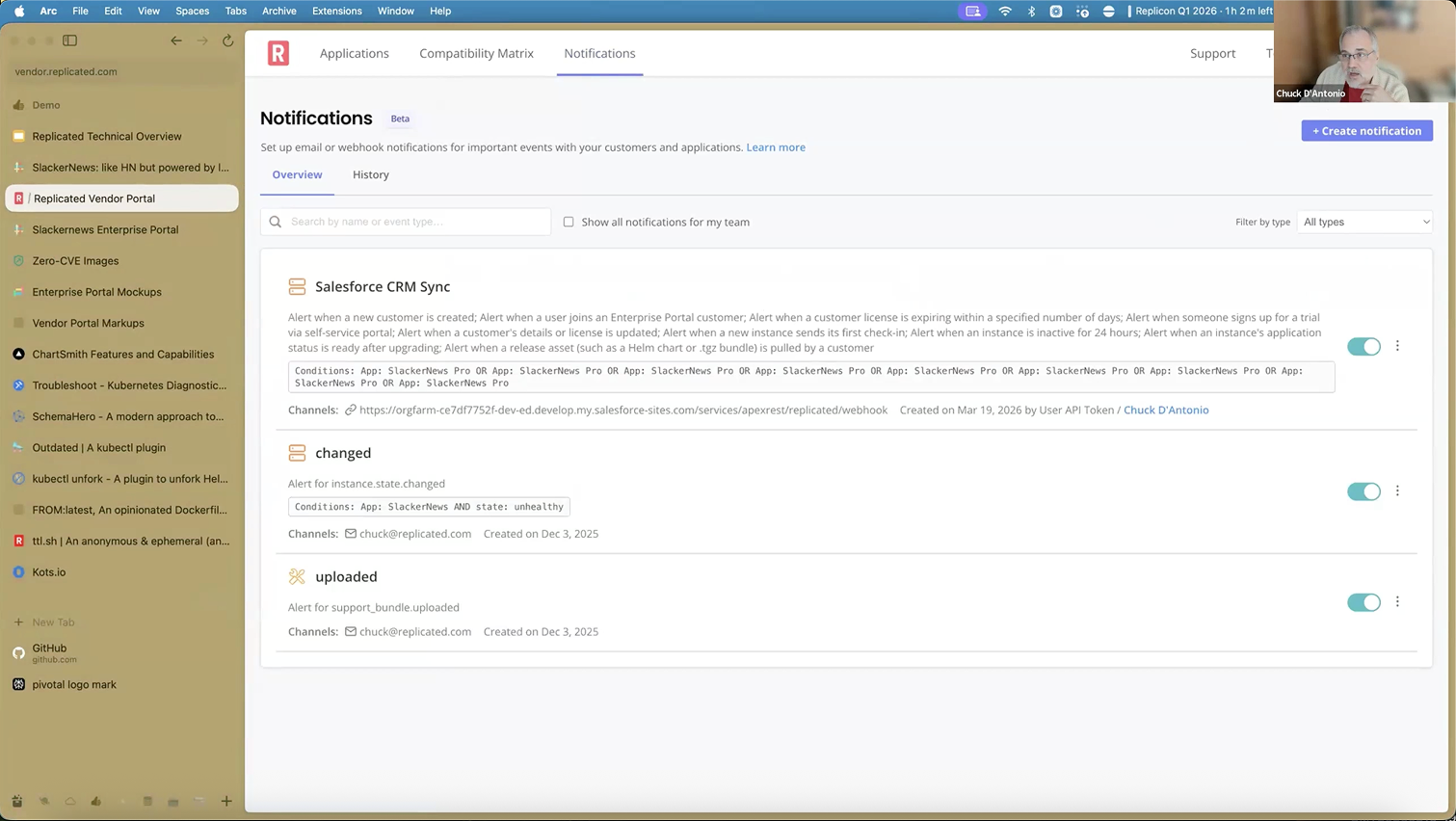
When a prospect signs up through the Enterprise Portal, a notification can trigger a webhook that creates a lead in Salesforce.
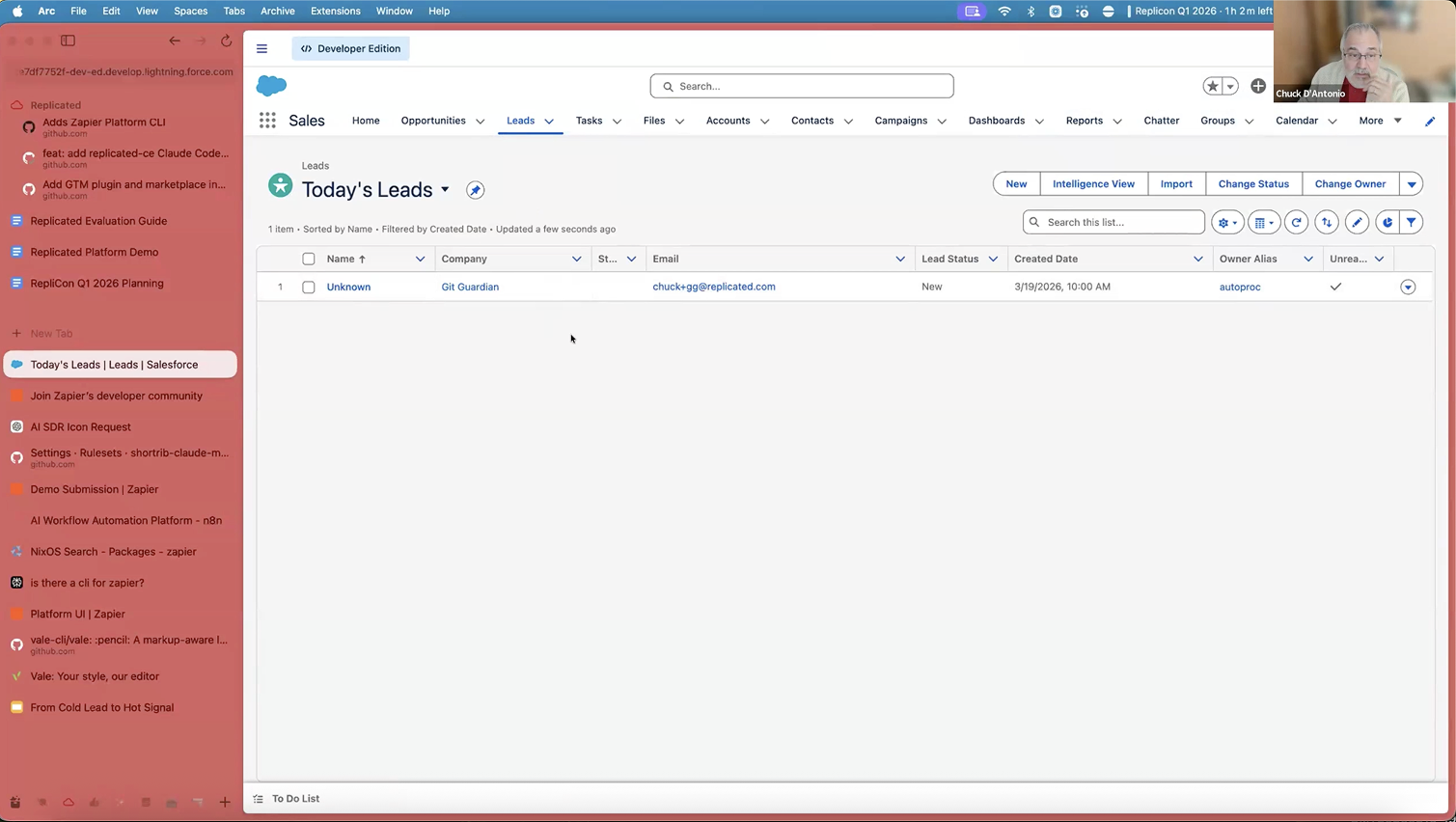
When that user logs in, that lead can automatically convert into an account, contact, and opportunity.
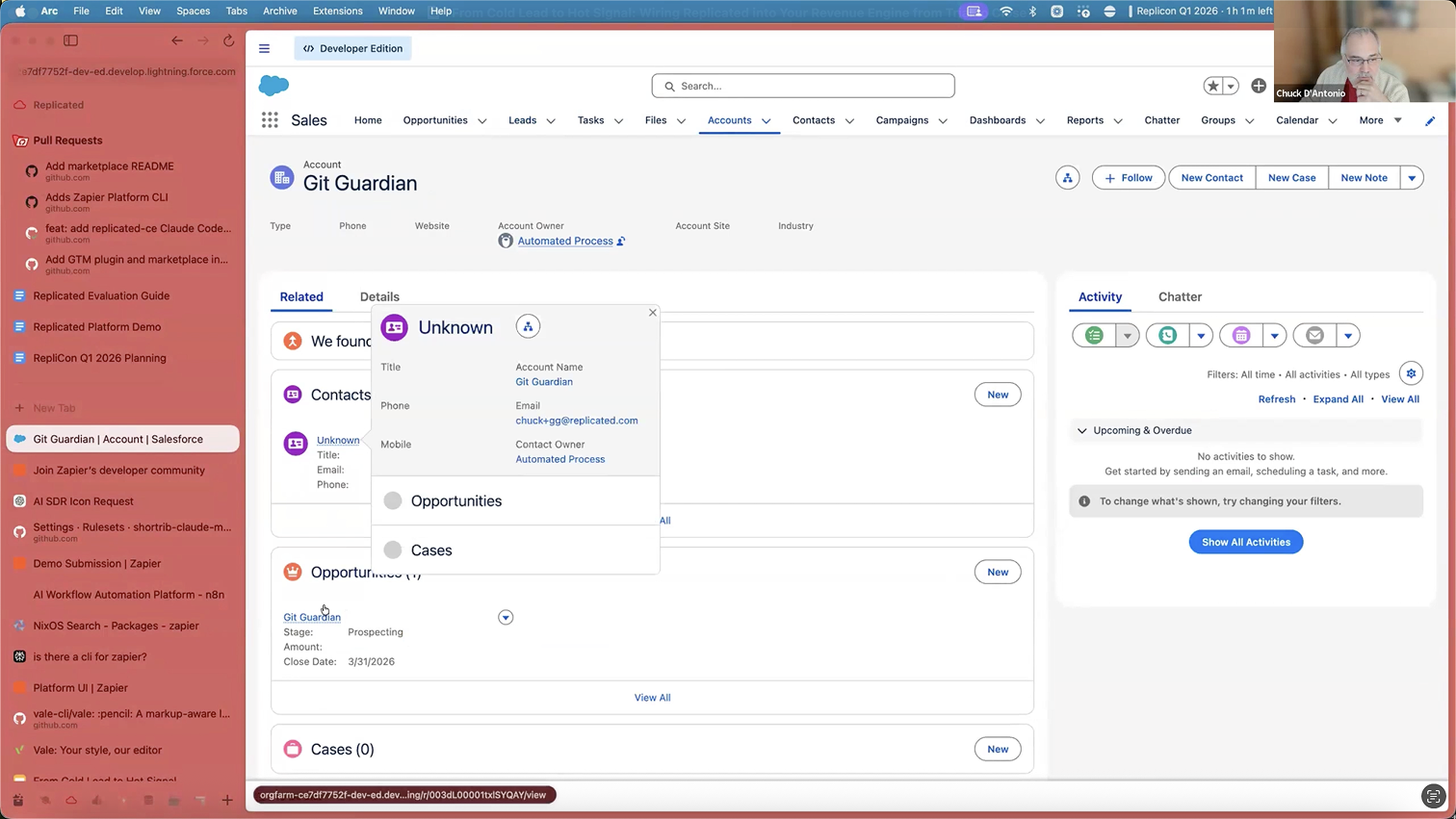
From there, product activity continues to flow into the CRM, including instance creation, upgrades, downloads, and user growth.
This creates a shared system where product activity and revenue activity stay in sync.
It also works in the other direction. When a deal is closed in Salesforce, that information can be pushed back into Replicated to convert a trial into a paid license, without requiring manual updates across systems.
From Signals to Action
Once these signals are in place, engagement becomes much more intentional.
Instead of guessing when to reach out, you can act on behavior.
A first login, an instance creation, or an upgrade all indicate increasing interest. Growth in users suggests internal traction.
Even expiration becomes a signal. If a trial is about to end and the user is still trying to access the product, that is a clear moment to engage.
Trials stop being passive and start functioning as an active part of your pipeline.
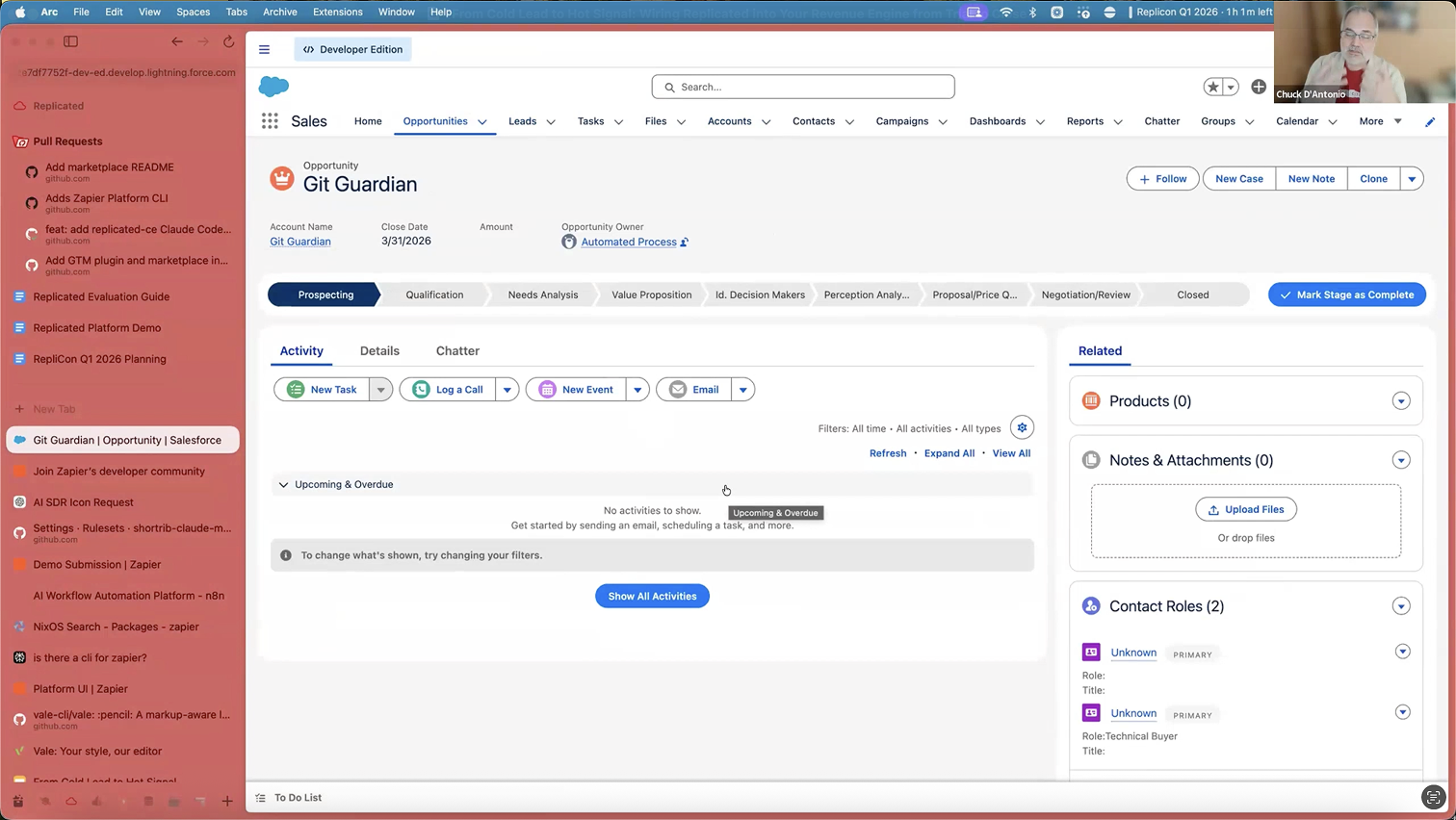
Closing the Loop from Trial to Revenue
The final step is connecting product usage to revenue outcomes.
When a deal is closed, that event can trigger updates in Replicated, such as converting a trial into a paid license.
And when a customer downloads or installs the software, that moment can be recorded back in the CRM as evidence of delivery.
This is especially important for revenue recognition, where teams need clear proof of when a customer actually gained access to the product.
Instead of stitching this together manually, the entire lifecycle, from trial signup to product usage to purchase, is captured as a connected set of events.
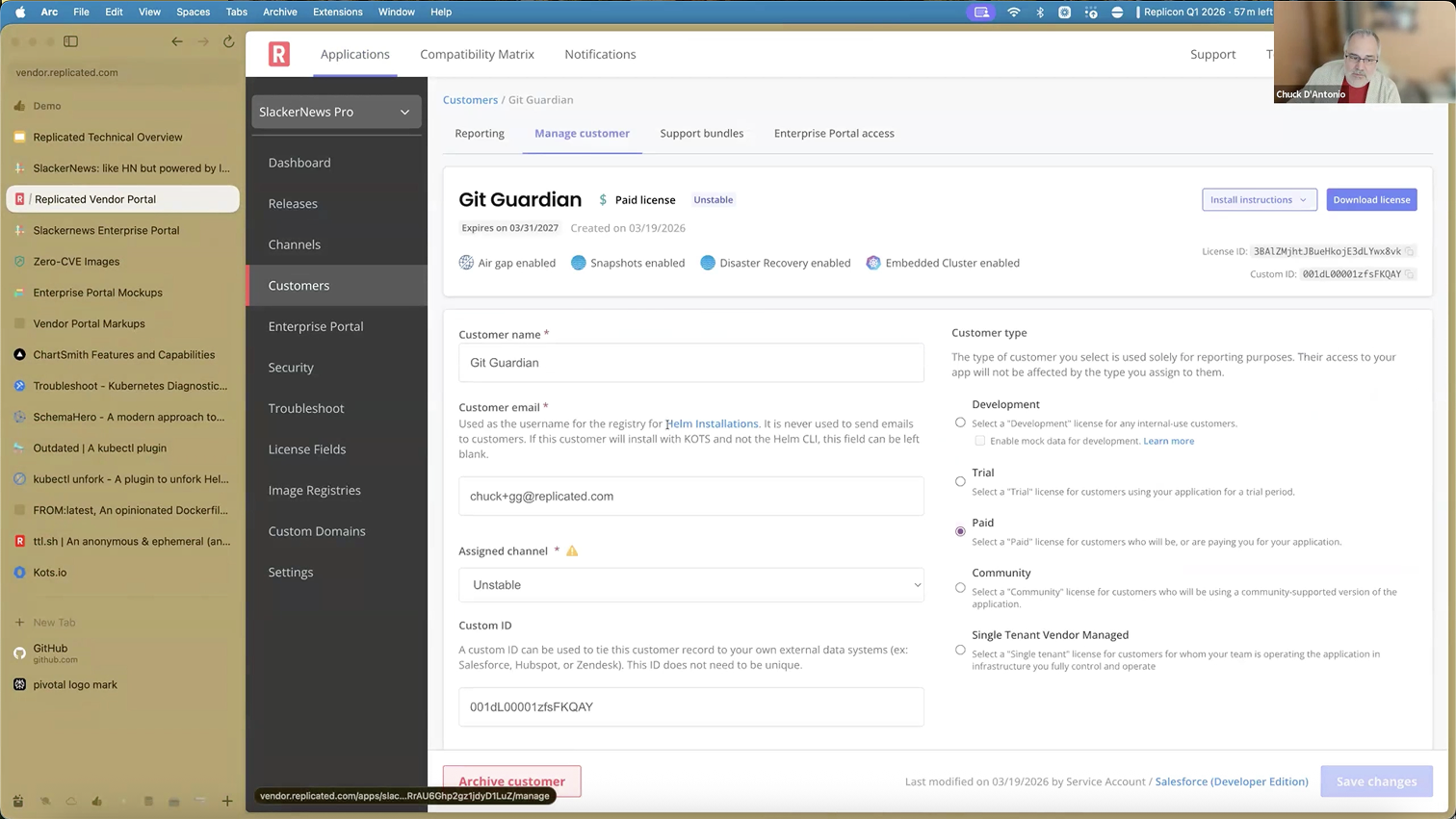
Turning Trials Into a Revenue Engine
Self-service trials do not have to be a black hole.
With the right signals in place, they become a reliable source of pipeline.
You can see who is engaging, how they are using your product, and when it makes sense to step in.
That visibility makes it easier to prioritize the right opportunities and convert interest into revenue.